Introduction
In this post, we’re looking at the cyber group called Dark Storm Team - who they are, what they want, and why they’ve been in the news lately. We’ll cover their big attack on Israel’s digital systems in July 2025, which hit government websites, banks, and news portals. You’ll also see which other countries they’ve targeted this year, like Italy, Germany, the UK, India, and more. We’ll go over the kinds of systems they go after and why. We’ll also look at how their actions are linked to global political tensions and what this might mean moving forward.
Who Is Dark Storm Team?
Dark Storm Team is a politically motivated hacktivist group that showed up on the radar in late 2023. They describe themselves as a pro-Palestinian cyber collective and mainly target governments and institutions they believe are against the Palestinian cause. Their main method? Launching DDoS attacks - a type of cyberattack that floods websites or online services to shut them down.
Their message is clear: they use these attacks as a form of digital protest, aiming to put pressure on countries they claim either support Israel or stand in the way of Palestinian rights.
Attack on Israeli Infrastructure – July 22, 2025
Dark Storm Team has claimed responsibility for a cyberattack targeting multiple high-profile Israeli websites. According to the group, these platforms were brought down using DDoS (Distributed Denial of Service) attacks. At the time of the incidents, several of the websites were inaccessible, as shown via tools like check-host.net .
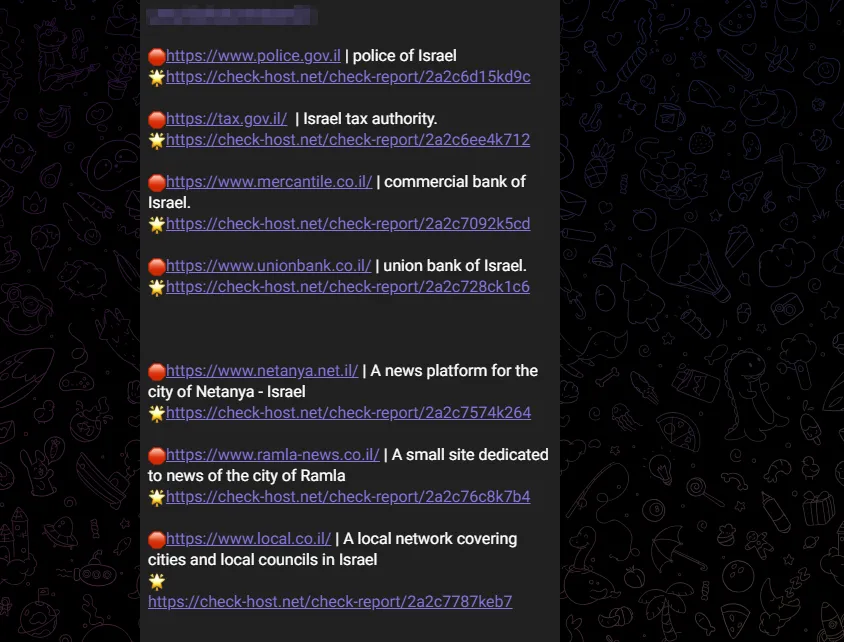
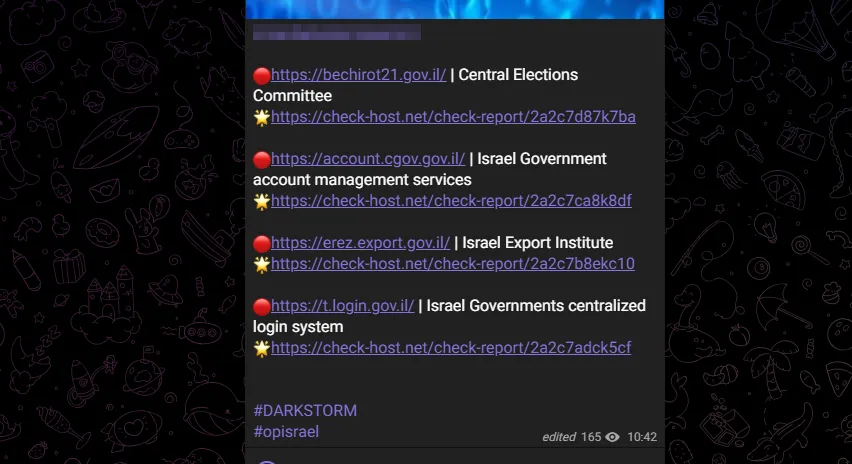
Dark Storm Team posted a series of check-host.net links on its Telegram channel indicating that several major Israeli websites were unresponsive or offline. Below is a breakdown of the key platforms targeted and their societal roles:
Government and Public Service Websites
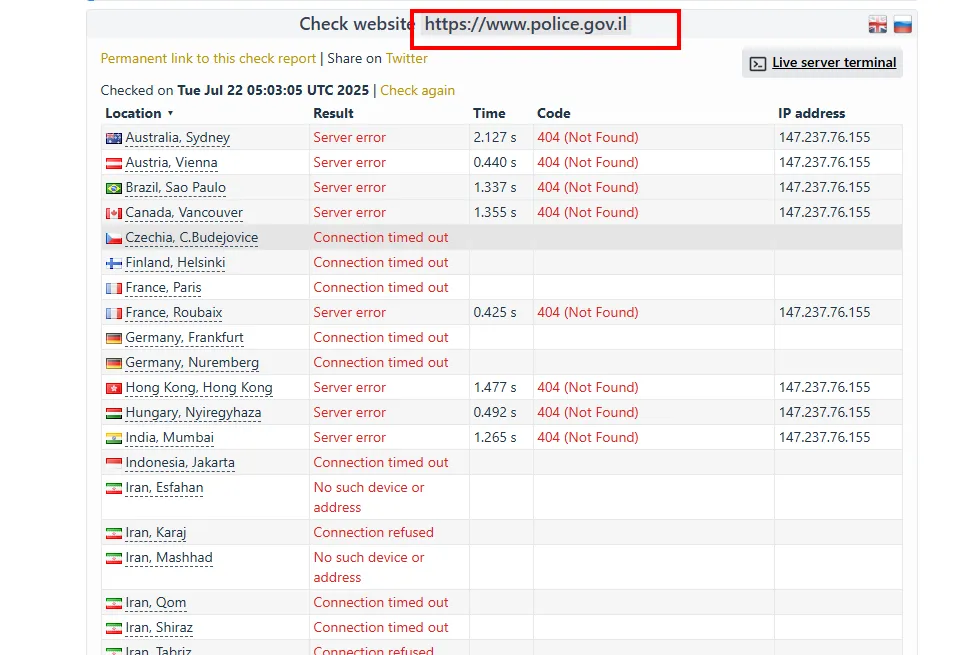
https://www.police.gov.il – The official website of the Israel Police. It serves as a public portal for law enforcement services, crime reporting, and community updates.
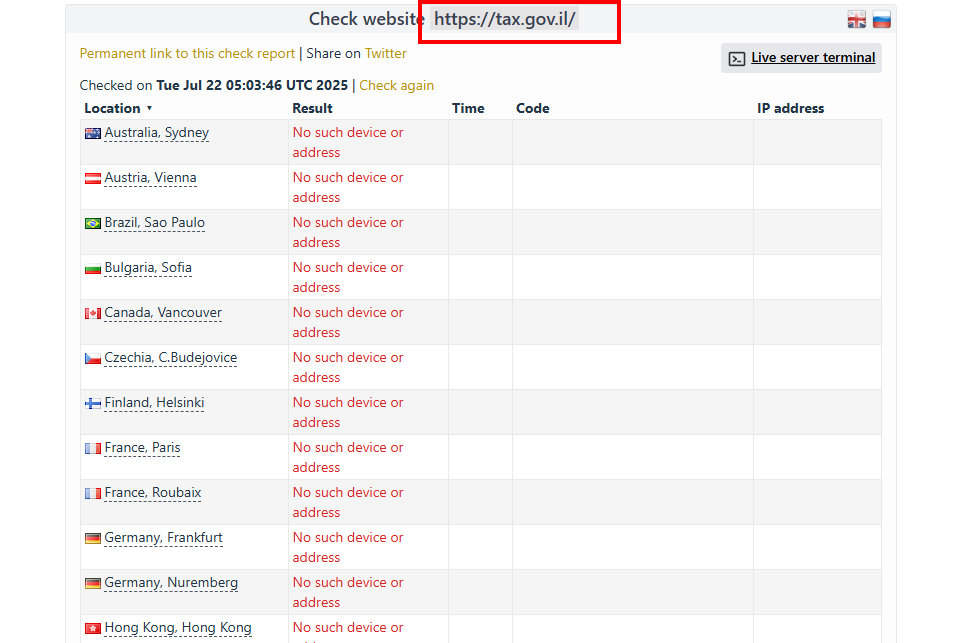
https://tax.gov.il/ – The Israeli Tax Authority’s website, which provides resources for individual and business taxpayers, tax filing, and government revenue services.
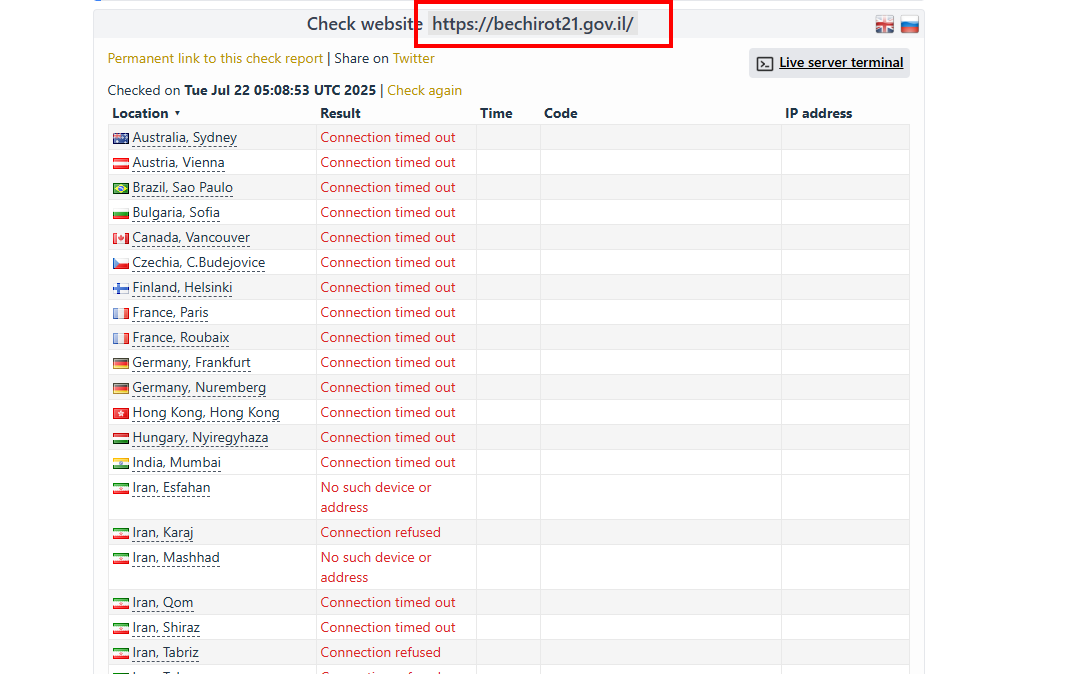
https://bechirot21.gov.il/ – This is the official site of the Central Elections Committee in Israel, responsible for organizing and publishing election-related information.
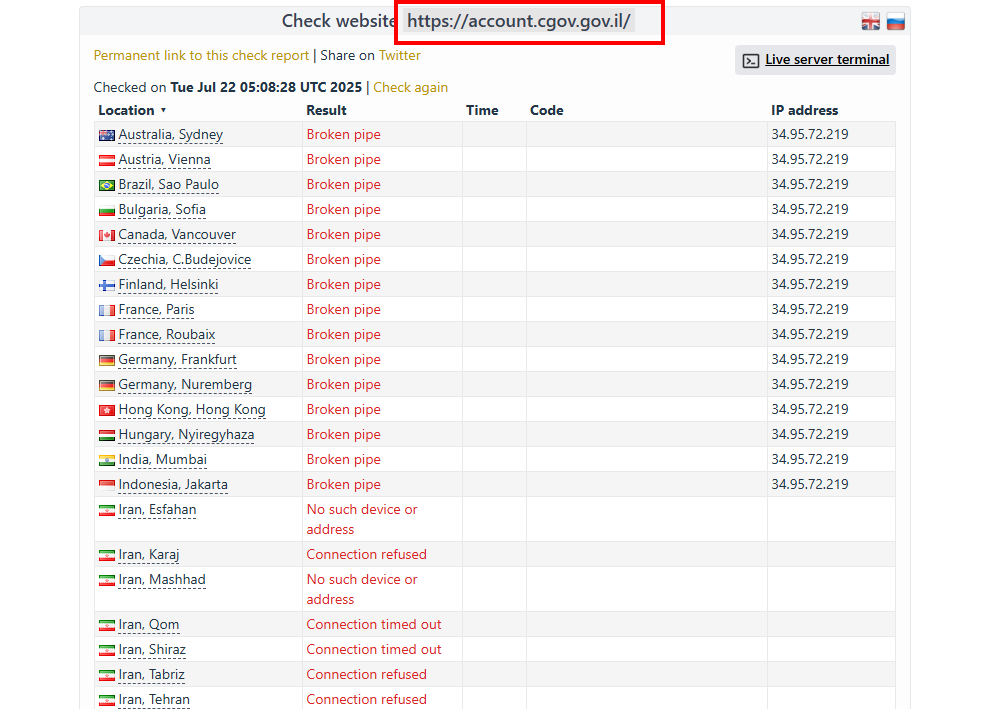
https://account.cgov.gov.il/ – A secure account management portal for accessing various Israeli government digital services.
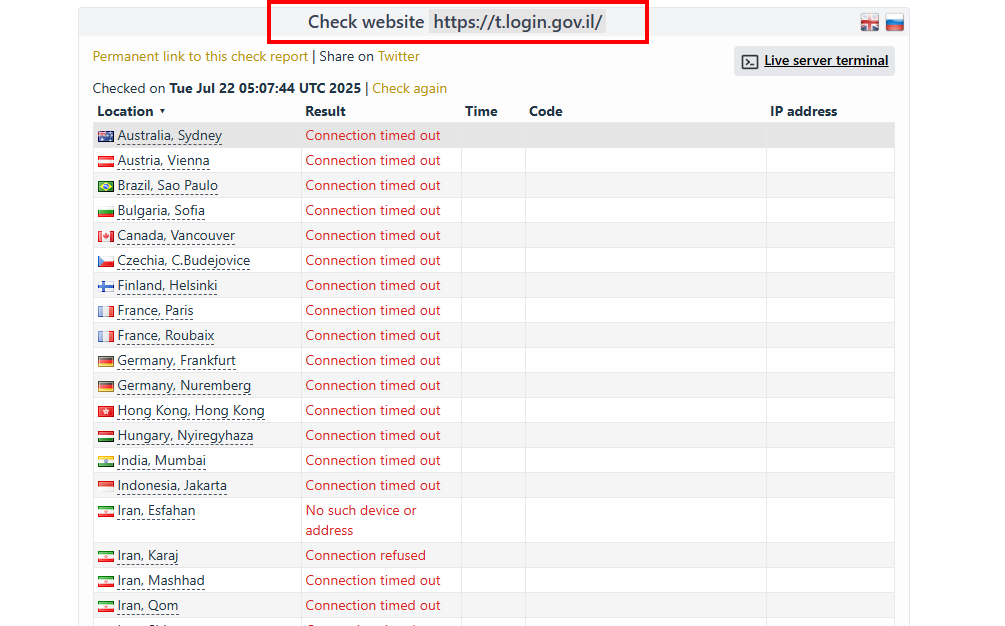
https://t.login.gov.il/ – Israel’s centralized digital login system for accessing various state-run services, including health, education, and finance.
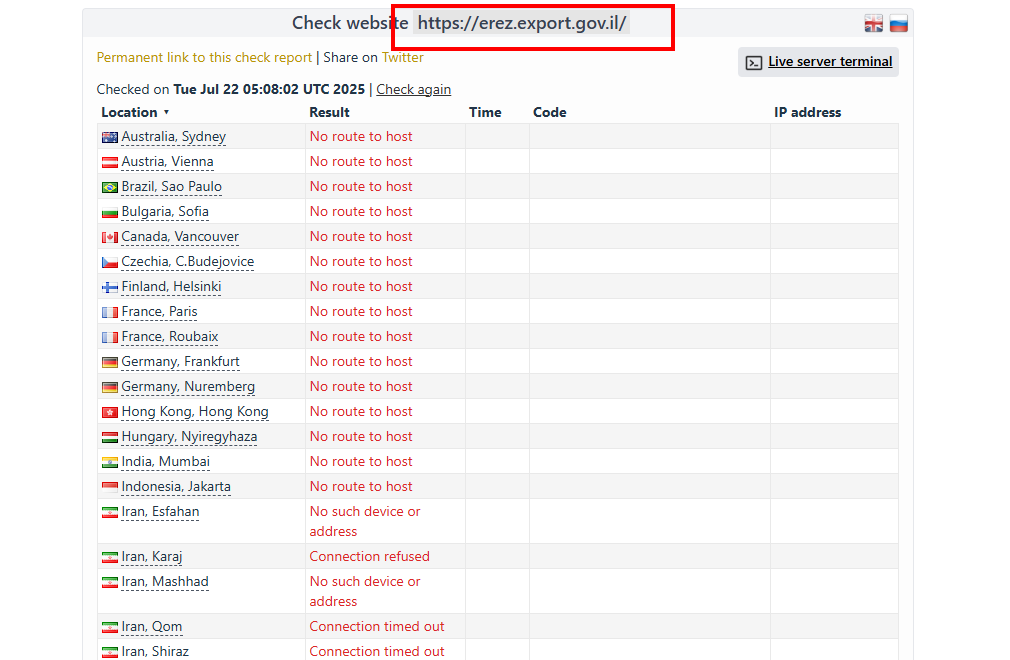
https://erez.export.gov.il/ – The portal for the Israel Export Institute, which promotes Israeli products and services internationally.
Financial Institutions
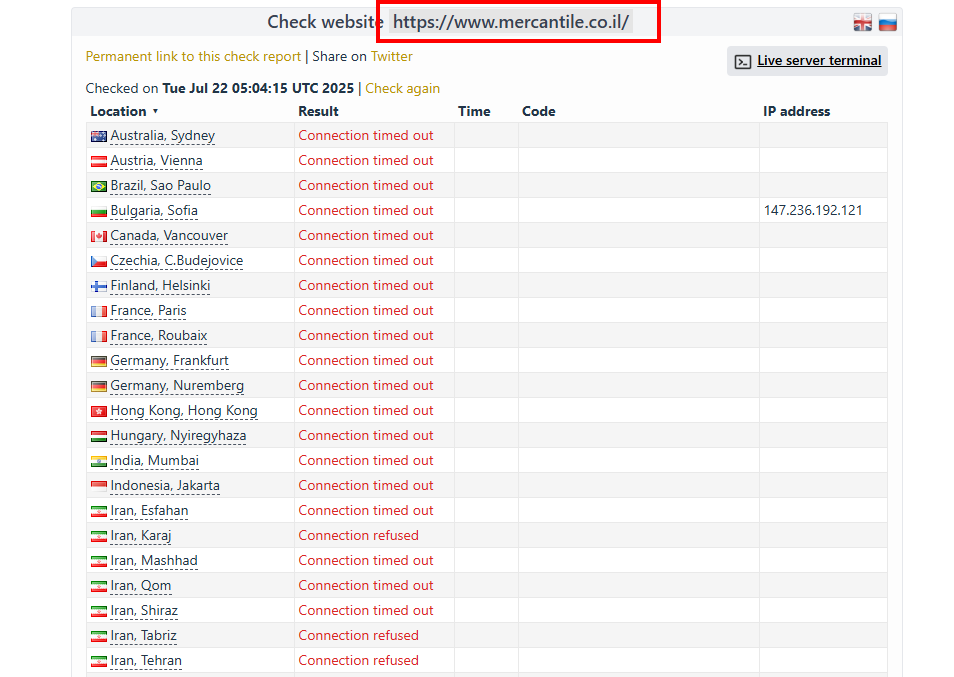
https://www.mercantile.co.il/ – Mercantile Bank, a commercial bank serving both personal and business customers across Israel.
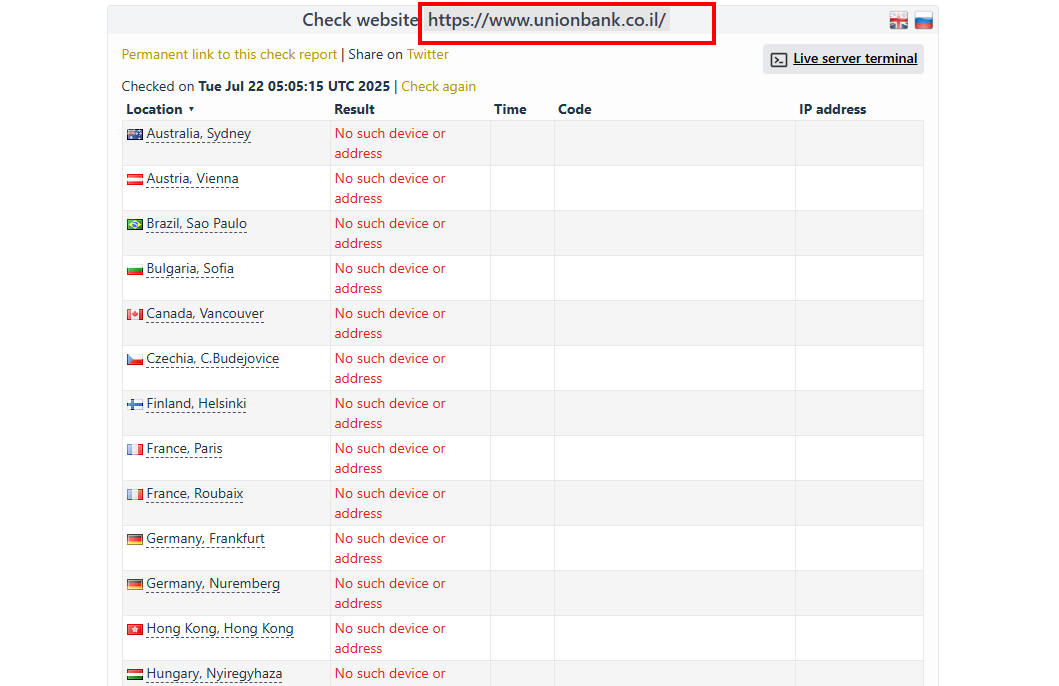
https://www.unionbank.co.il/ – Union Bank of Israel, one of the country’s major financial institutions.
Local and Municipal News Portals
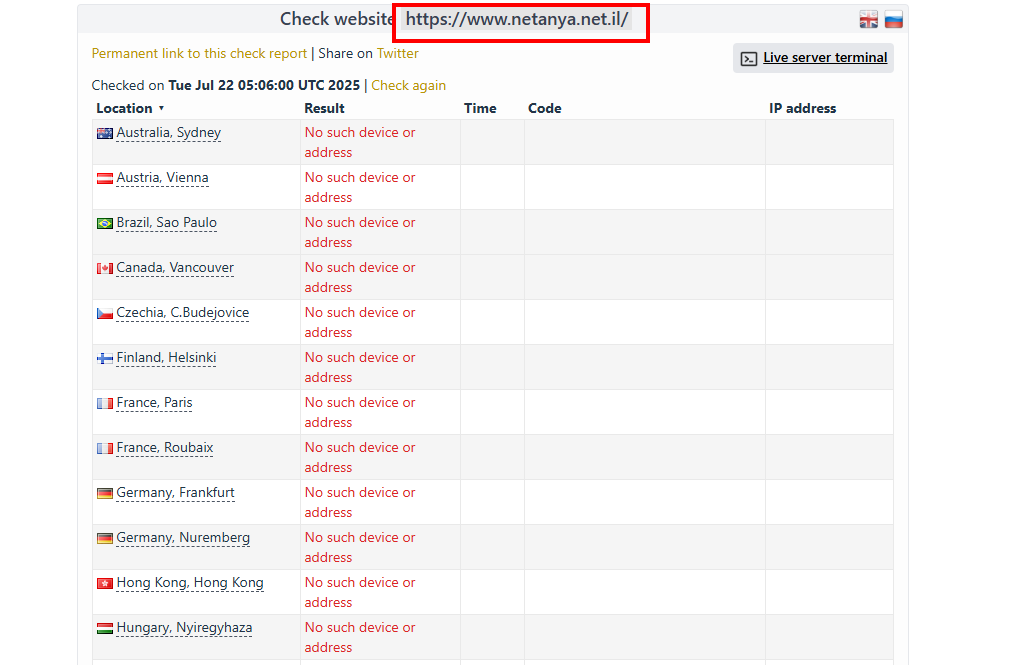
https://www.netanya.net.il/ – A city-specific platform offering news and civic resources for residents of Netanya.
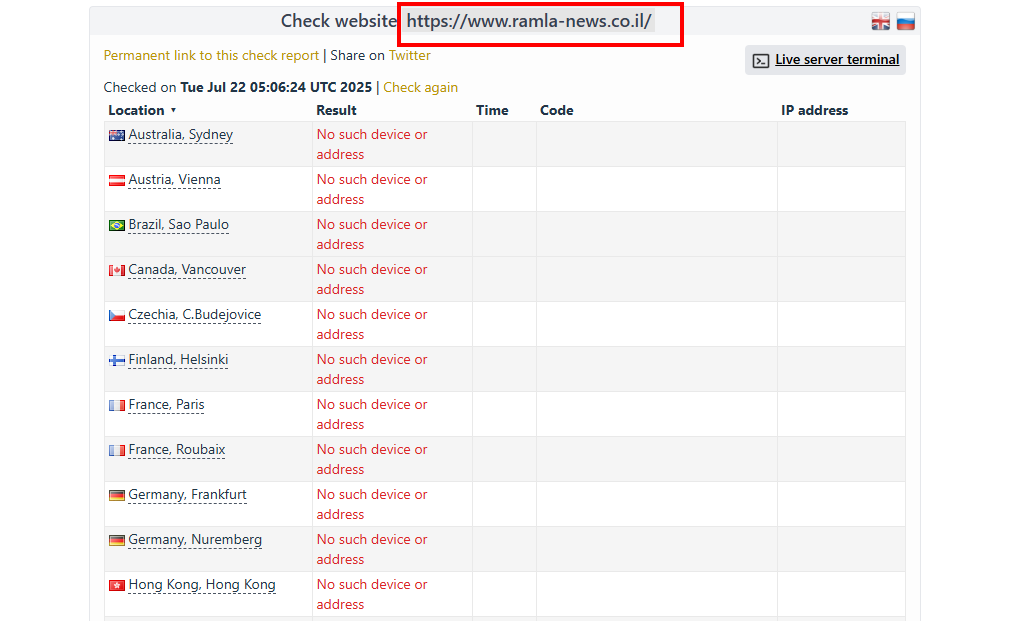
https://www.ramla-news.co.il/ – A hyperlocal news portal covering community stories in the city of Ramla.
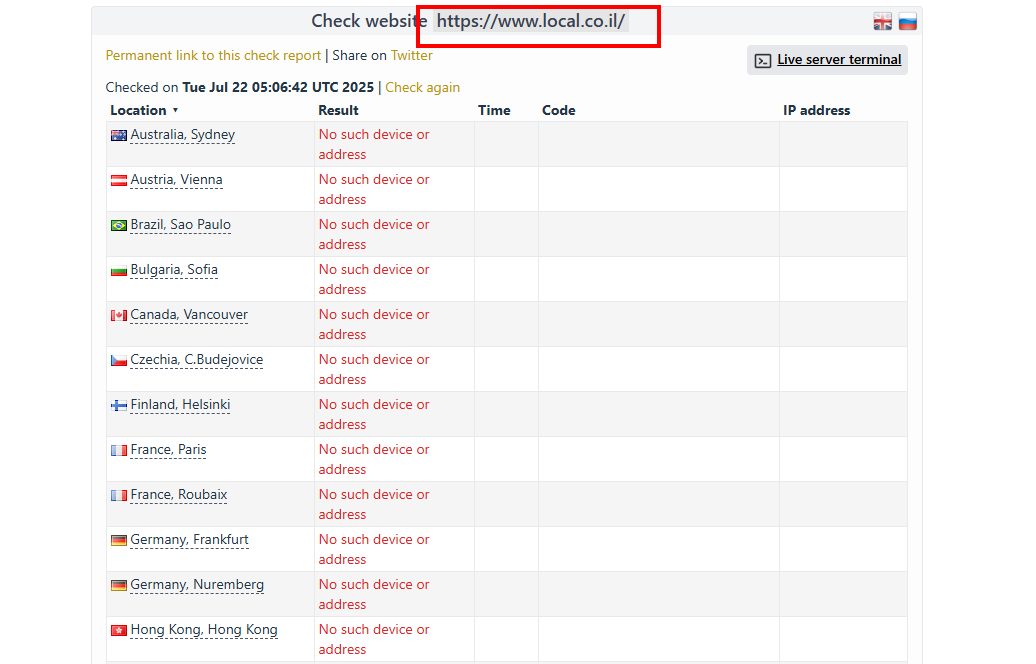
https://www.local.co.il/ – A nationwide local news network covering various towns and municipal councils throughout Israel.
Countries Targeted by Dark Storm Team
Italy
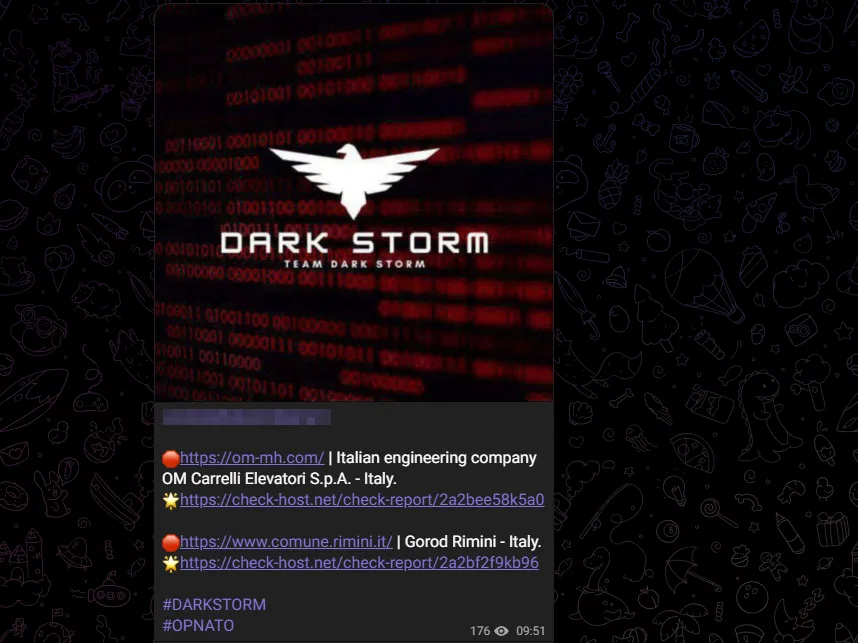
- OM Carrelli Elevatori S.p.A. – An Italian company known for manufacturing forklifts and industrial vehicles. The company's systems were disrupted, affecting supply chain operations.
- Gorod Rimini – The online portal for the municipality of Rimini was targeted, disrupting local governance and public information services.
Germany
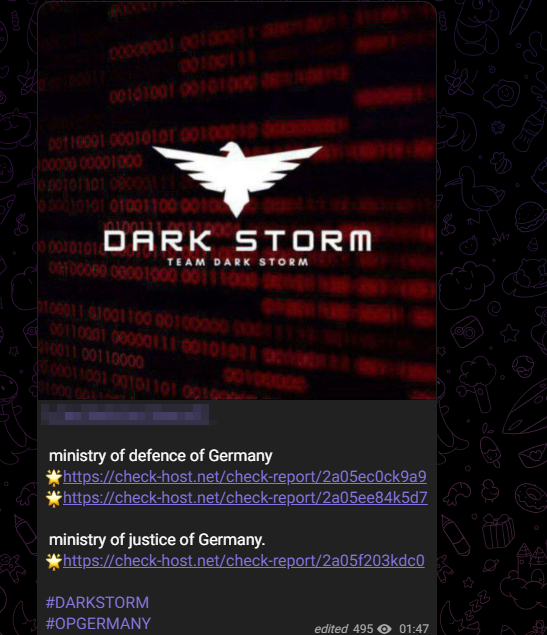
- Ministry of Defence of Germany – Responsible for Germany’s military operations; its online infrastructure faced service outages.
- Ministry of Justice of Germany – The judicial administrative site was affected, potentially delaying public access to legal resources.
Thailand
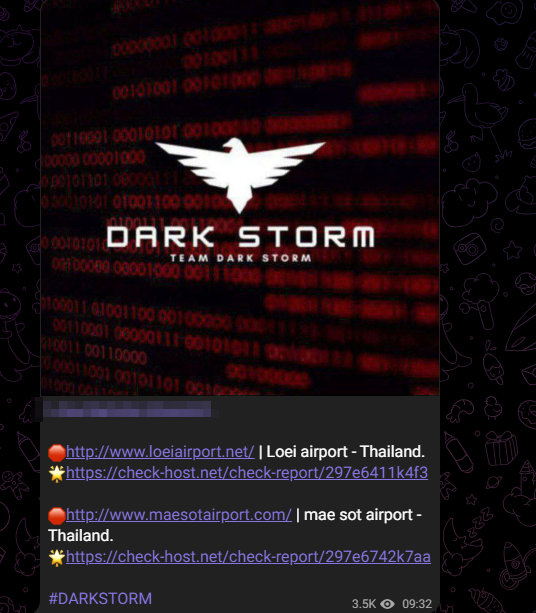
- Ministry of Agriculture of Thailand – A national agency overseeing food security and farming. The attack interfered with internal communications and public updates.
- Loei Airport, Mae Sot Airport, U-Tapao Rayong Airport, Don Mueang Airport – Four Thai airports experienced service slowdowns and temporary outages affecting booking systems and public access.
United Kingdom
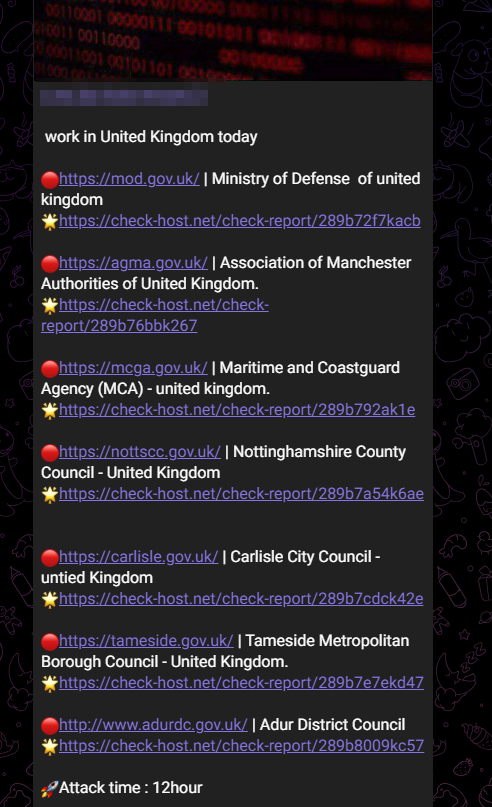
- Ministry of Defence of the United Kingdom – The central defense body for UK military affairs was reportedly disrupted.
- Association of Manchester Authorities – A regional local government body; its services faced interruption.
- Maritime and Coastguard Agency (MCA) – Handles UK marine safety and rescue services; targeted systems faced brief outages.
- Nottinghamshire County Council, Carlisle City Council, Tameside Metropolitan Borough Council, Adur District Council – Multiple councils saw disruptions to their public-facing digital services.
Ethiopia
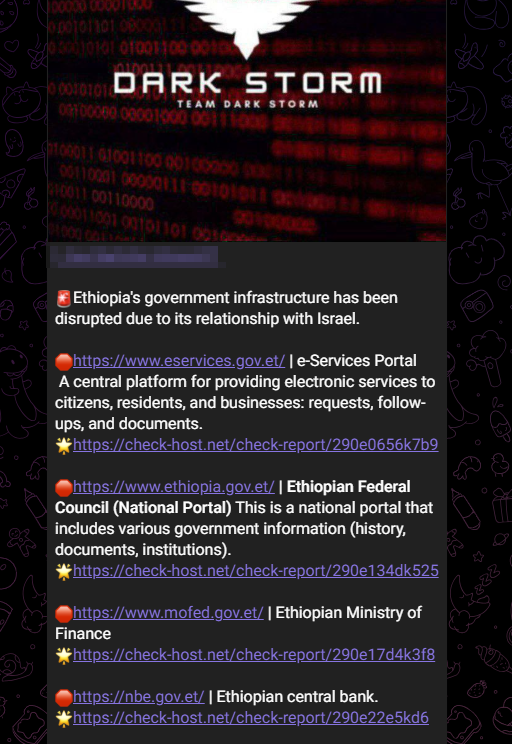
- e-Services Portal – A centralized digital portal providing government services to citizens and businesses was temporarily shut down.
- Ethiopian Federal Council – This national site for government documentation and policy saw accessibility issues.
- Ethiopian Ministry of Finance – Disruption affected budget and taxation communications.
- Ethiopian Central Bank – Potential financial system impacts were observed, although not officially confirmed.
India
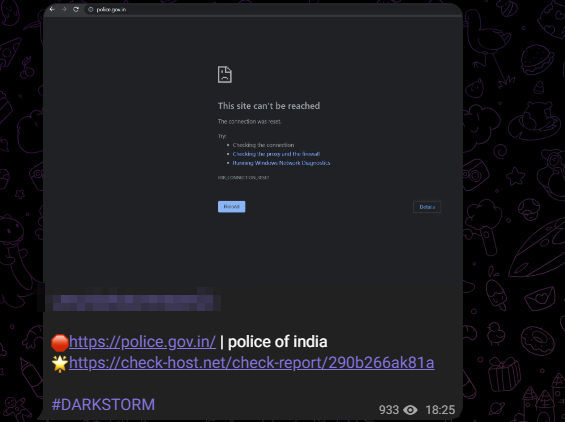
- Indian Police Services – Regional police portals in several states were slowed or temporarily disabled, disrupting administrative tasks.
Lebanon
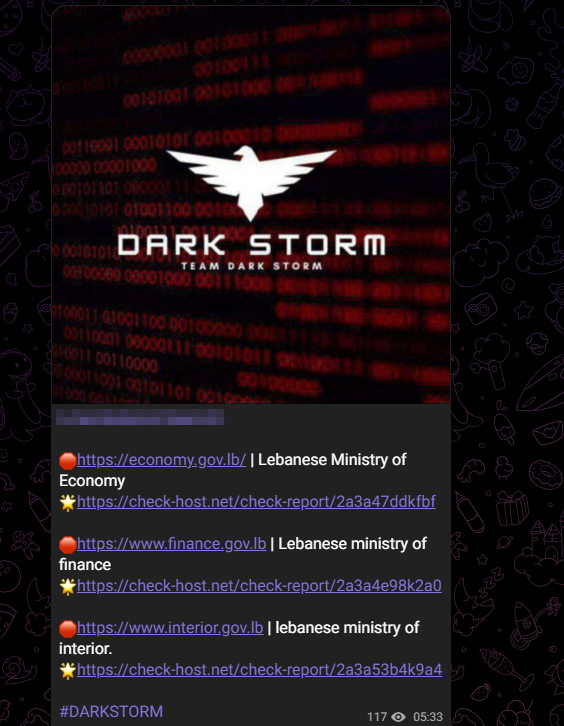
- https://economy.gov.lb/ – Lebanese Ministry of Economy; the website was inaccessible, impacting economic policy visibility.
- https://www.finance.gov.lb – Lebanese Ministry of Finance; downtime interfered with fiscal data and public announcements.
- https://www.interior.gov.lb – Lebanese Ministry of Interior; cyberattack disrupted access to civil administration and public safety services.
Dark Storm Team's Plans to Target NATO Countries
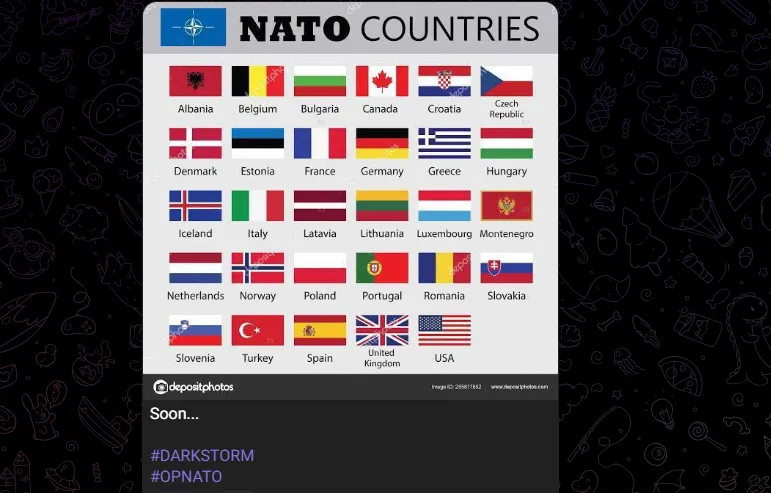
The group has shared visual propaganda showing the flags of NATO countries, hinting that they plan to go after all NATO members. They believe NATO supports Israel and broader Western interests, which they strongly oppose. This suggests that their focus isn’t just on one region, they see themselves as fighting against global alliances they disagree with.
Attacks Motivated by Geopolitical Alliances
In several instances, Dark Storm Team has targeted countries not solely for their own policies but due to their political alliances and actions related to Israel or Ukraine.
Egypt
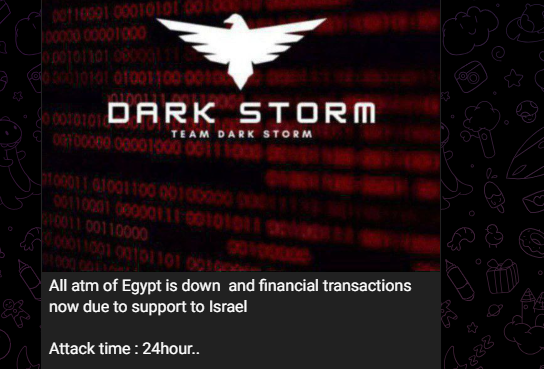
- On July 8, the group claimed that all ATMs and financial systems in Egypt were taken down as retaliation for the country’s support of Israel.
Ethiopia
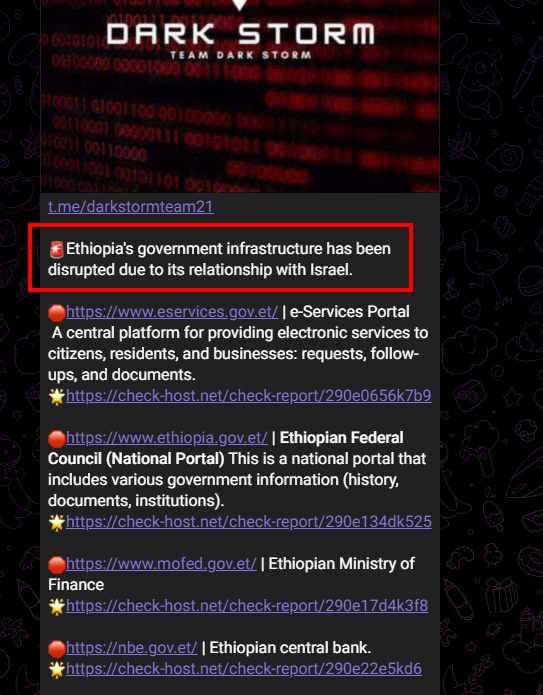
- On July 5, the group disrupted multiple Ethiopian government websites due to Ethiopia’s long-standing relationship with Israel.
New Zealand
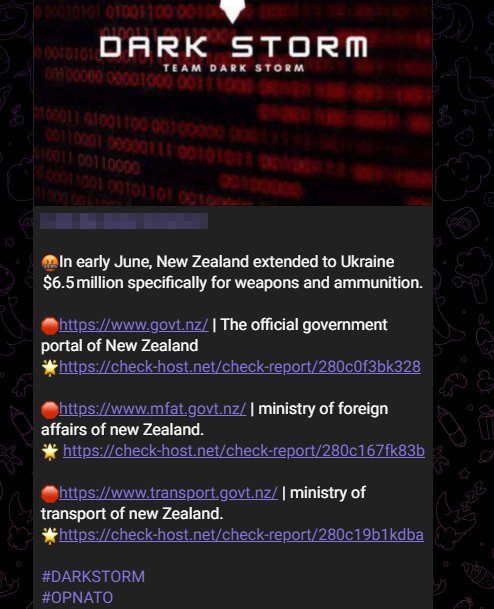
- In early June, New Zealand pledged $6.5 million in military aid to Ukraine, specifically for weapons and ammunition. Shortly after, Dark Storm Team issued threats against New Zealand.
Act Now: Strengthen Your Cyber Defenses
In light of the growing wave of politically motivated cyberattacks, it is essential for government agencies, private companies, and operators of critical infrastructure to strengthen their cybersecurity readiness. This includes keeping all systems and software up to date, routinely performing thorough security audits, and remaining vigilant for any signs of unusual network activity that might indicate a DDoS or intrusion attempt.
Organizations should invest in building a solid incident response strategy, ensuring teams know how to quickly contain and recover from attacks. Collaboration with national or regional cybersecurity authorities can also improve early threat detection and coordinated defenses.
Conclusion
Dark Storm Team has emerged as one of the most aggressive and visible hacktivist collectives in 2025. Their string of attacks highlights how cyberwarfare is being used not just as a technical threat, but as a tool for spreading political messages and disrupting adversaries. By deliberately targeting governments, financial systems, and public services, the group aims to create pressure and chaos that align with its ideological beliefs.
As global tensions continue to shape the digital battlefield, it becomes increasingly important for nations and institutions to treat cybersecurity as a core element of national defense. Preparation, awareness, and swift response are now critical in navigating this era of cyber-political conflict.