
Introduction: A Wake-Up Call for the Retail Sector
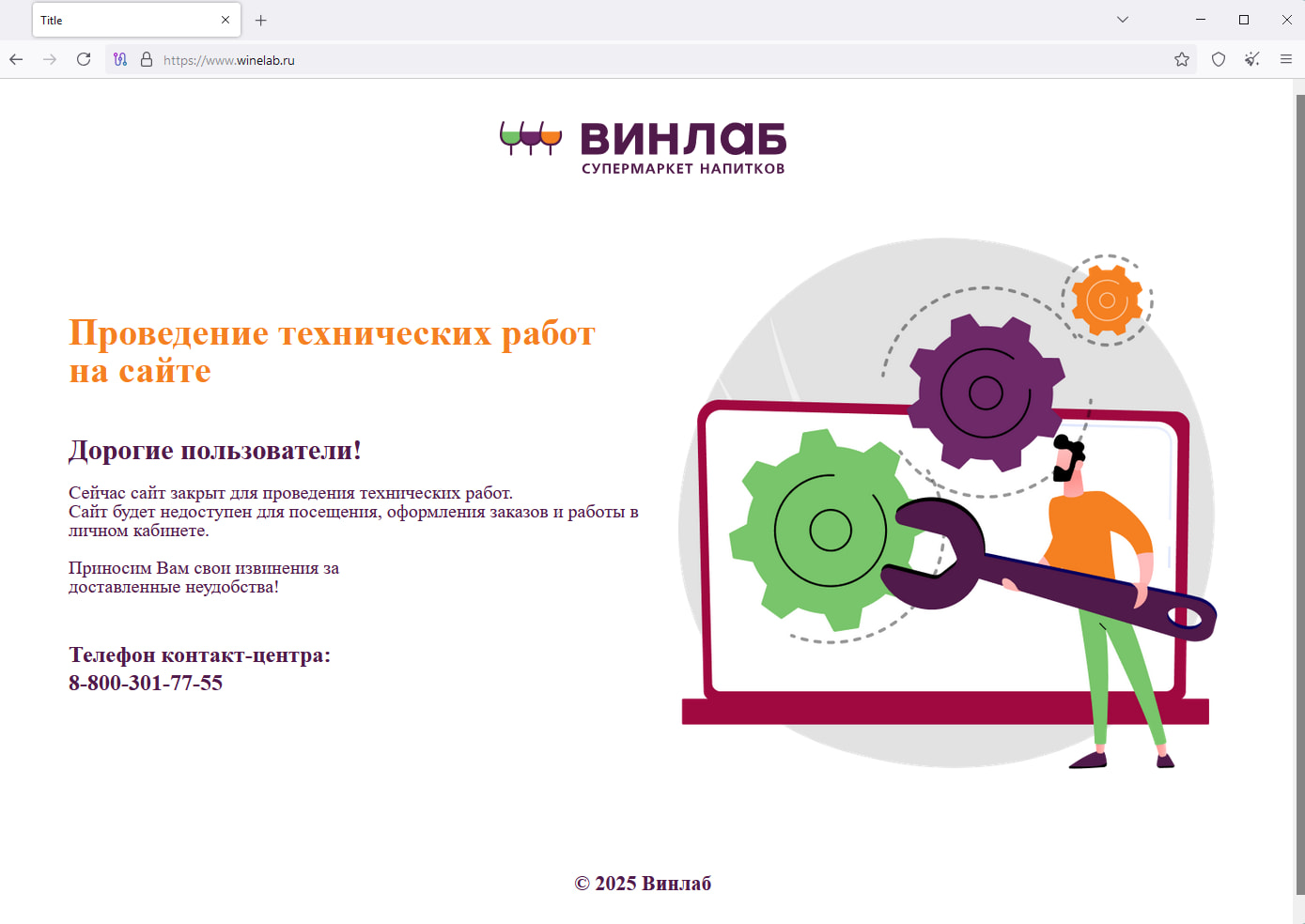
In a startling example of ransomware's destructive potential, Novabev Group, the parent company of one of Russia's largest alcohol retail chains, WineLab, was hit by a devastating cyberattack on July 14, 2025. Known locally as "VinLab," WineLab operates over 2,000 retail stores across Russia. Within hours, the ransomware attack brought their entire retail and digital infrastructure to a grinding halt.
Stores posted signs about "technical issues," but the reality was far worse. Point-of-sale terminals failed. Websites and mobile apps went dark. Customers were left with no way to shop or pick up existing orders. For Novabev, the operational and financial damage was immediate and profound.
What Happened: The Incident That Shut Down WineLab
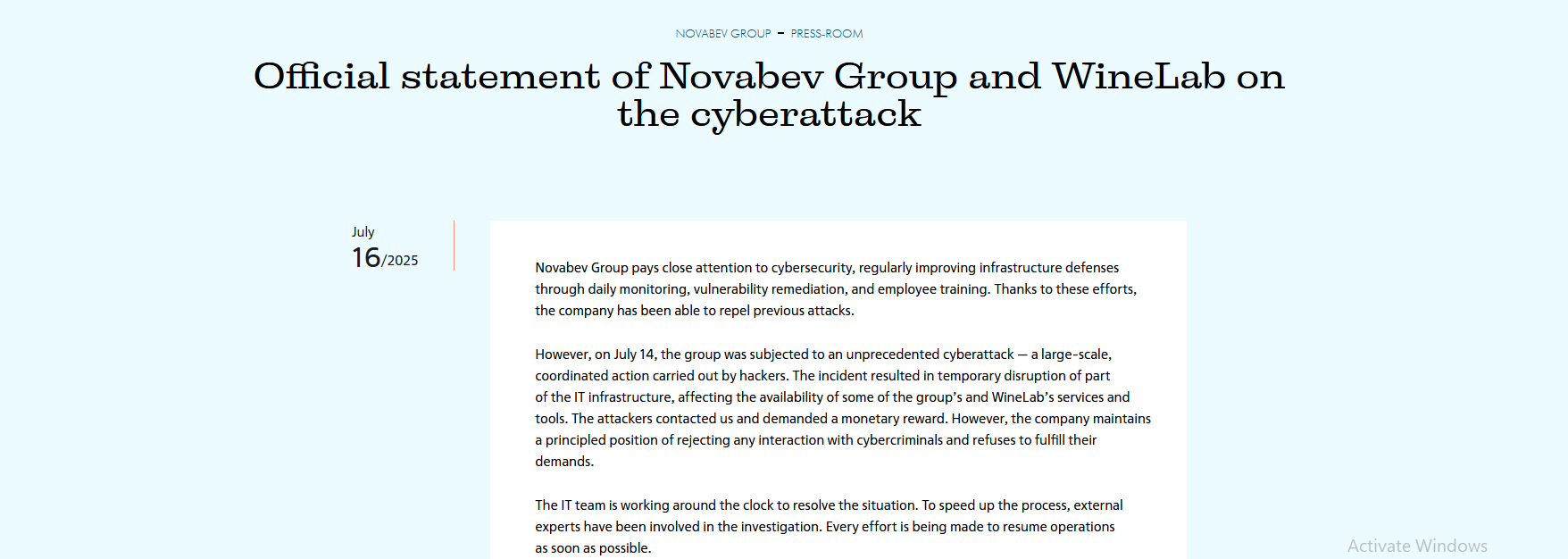
On July 14, Novabev Group was hit by a coordinated ransomware attack that severely impacted WineLab’s operational infrastructure.
According to an official company statement, the attack was a large-scale, well-planned operation that temporarily disrupted several components of Novabev’s and WineLab’s IT systems. Despite having previously repelled cyber threats through strong defenses including daily monitoring, vulnerability patching, and employee training , this incident marked an unprecedented breach.
The impact was immediate and widespread:
- Point-of-sale (POS) systems in physical stores became non-functional.
- E-commerce platforms and mobile apps were taken offline.
- Order processing and inventory tracking systems were encrypted.
- Internal communication and logistics channels were significantly disrupted.
The attackers contacted Novabev and demanded a ransom. However, the company reaffirmed its strict no-negotiation policy with cybercriminals and refused to fulfill any demands. Instead, its IT team began working around the clock, joined by external cybersecurity experts, to investigate and resolve the incident.
The Attack Chain: How the Breach Unfolded
Although technical forensics are still under wraps, a typical ransomware kill chain likely unfolded as follows:
Initial Access: Entry may have been achieved through phishing emails, compromised VPN credentials, or exploitation of unpatched software.
Privilege Escalation: Attackers gained administrative access to key systems.
Reconnaissance: Critical assets such as POS databases, file servers, and application hosts were mapped.
Lateral Movement: Malware was distributed across the enterprise network, likely using stolen credentials and internal scripting tools.
Payload Deployment: On July 14, ransomware was executed simultaneously across multiple nodes, encrypting data en masse.
Exfiltration: Internal data was likely stolen in a double-extortion move, although no customer data breach has been confirmed.
Ransom Demand: Novabev received a communication demanding payment in exchange for decryption keys and data non-disclosure.
Response and Recovery: Systems were taken offline. Incident response teams and external cybersecurity experts began containment and restoration.
The Fallout: What Was the Business Impact?
1. Revenue Losses
WineLab’s complete operational outage lasted for at least 3 days, during which time it was losing ₽200–300 million daily (USD $2.6–$3.8 million). With over 2,000 stores down, even a short interruption translated into tens of millions of dollars in lost revenue.
2. Supply Chain Breakdown
The ransomware attack brought Novabev’s supply chain to a standstill. Product shipments were halted, warehouses quickly filled with unsent inventory, and restocking cycles across WineLab stores were thrown into disarray. The disruption made it impossible to maintain normal stock levels in retail outlets.
3. Customer Trust & Brand Reputation
Customer frustration grew as users were unable to pick up or receive orders. The website and mobile app were offline for several days, leaving buyers without access to products or order status. While early investigations found no evidence of a data breach, the incident attracted significant media coverage and raised public concerns about operational reliability.
4. Operational Downtime
Thousands of employees across stores, warehouses, and corporate offices were left idle. Logistics and inventory teams were unable to perform core duties.
5. Incident Response Costs
Novabev deployed internal teams and hired third-party cybersecurity experts. Restoration was manual and intensive due to their refusal to pay ransom.
Attribution: Who Was Behind the Attack?
No group has claimed responsibility. This is unusual because ransomware actors often post stolen data on dark web leak sites to pressure victims. Speculation includes:
Rogue ransomware affiliates not bound by the "no Russian targets" rule.
Upstart criminal groups trying to establish notoriety.
Hacktivist collectives like NB65 or OldGremlin, known for targeting Russian entities.
Novabev has declined to comment further pending investigation.
Recovery Update: Gradual Restoration Begins
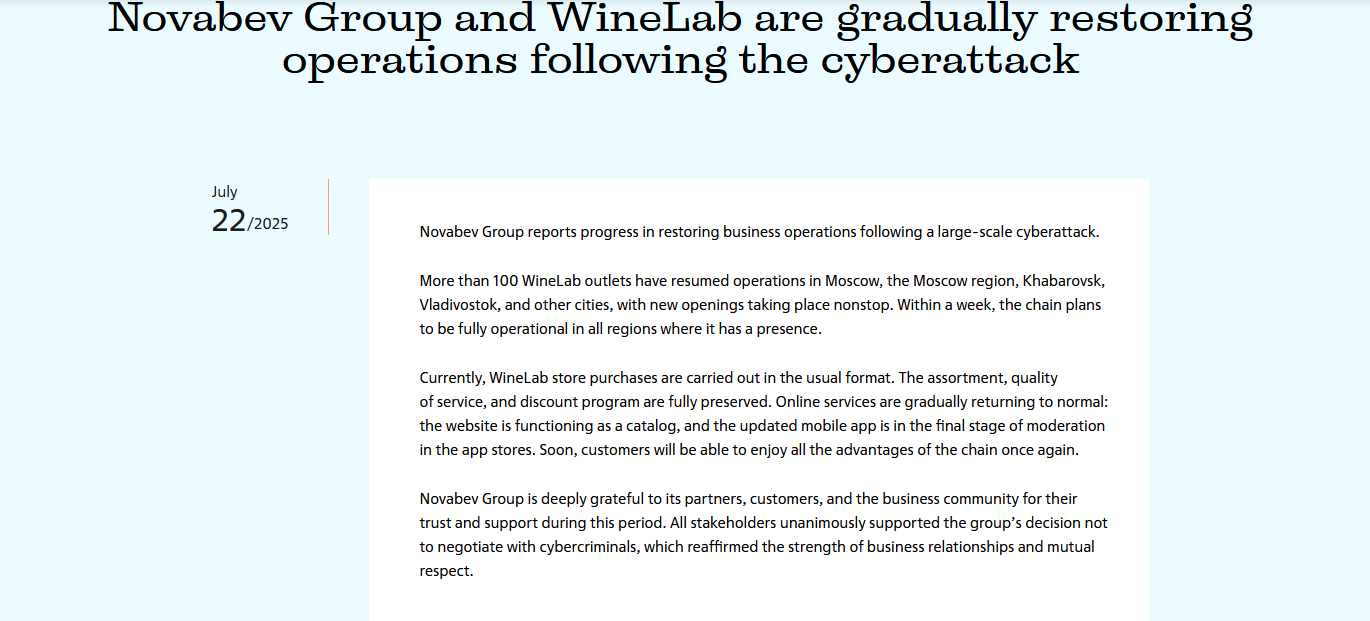
By July 22, Novabev Group began reporting steady progress in restoring operations. According to an official update, more than 100 WineLab outlets had resumed service in cities including Moscow, Khabarovsk, and Vladivostok, with new reopenings happening daily. The company stated that it planned to fully restore operations across all regions within a week.
While physical store sales returned to normal formats with product assortment, service quality, and discount programs fully preserved , online operations were still in recovery mode. The website was operating in "catalog mode," allowing browsing but not purchases. A new version of the mobile app was undergoing final moderation in app stores.
Novabev publicly thanked partners, customers, and the business community for their trust and support, emphasizing that all stakeholders stood behind the decision not to negotiate with the attackers. The group reiterated its commitment to transparency and business integrity during recovery.
Key Lessons and Recommendations
1. Tested Backup & Recovery Plans Save Businesses
Refusing to pay ransom is only viable if you have a reliable, tested backup strategy. Novabev’s restoration was slow but possible due to some level of backup preparedness.
2. Zero Trust and Network Segmentation
Attackers moved freely between systems. Segmenting POS, inventory, and internal comms could have limited blast radius.
3. 24/7 Monitoring is Non-Negotiable
Had threat activity been detected earlier, the attack might have been contained before execution.
4. Cyber Insurance and Crisis Communication
Transparent updates and customer-first messaging helped mitigate brand damage.
5. Global Enterprises Are Not Safe at Home
The attack broke a long-standing trend of Russian ransomware gangs avoiding domestic targets. Every organization, regardless of geography, is now fair game.
Final Thoughts: A Cybersecurity Turning Point for Retail
The WineLab ransomware attack is a rare and high-impact case where an entire national retail chain went dark. For Novabev, it was a brutal lesson in the cost of digital vulnerability. For the rest of us, it’s a clear signal:
No matter how many stores you have, one compromised admin account can shut them all.
Now is the time to harden defenses, audit your response plans, and act like it’s just a matter of when, not if. Because as WineLab learned, ransomware doesn’t just steal data—it steals your business continuity.
References
https://therecord.media/novabev-russia-vodka-maker-ransomware-attack
https://www.scworld.com/brief/ransomware-incident-disrupts-russian-vodka-maker


